


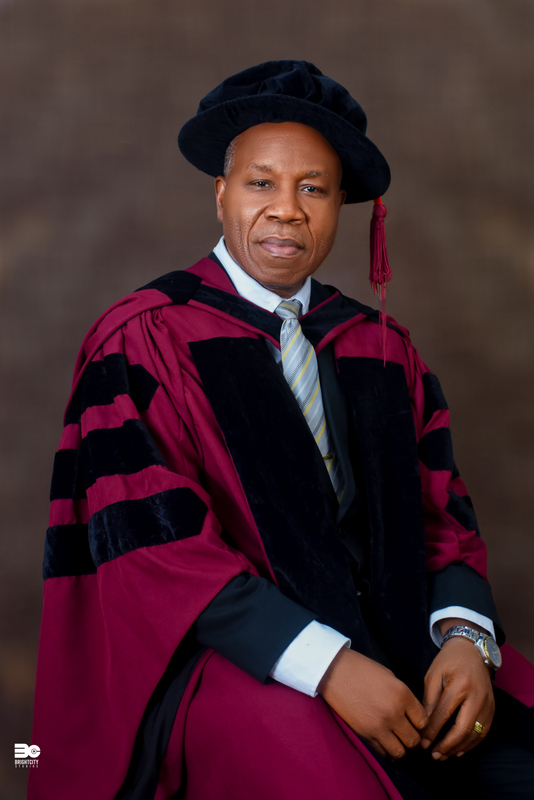
Mbaise And The Challenges Of The 21st Century
BY
Prof. Joachim A. Onyike, KSM, FNIVS, RSV.
Former Dean, Faculty of Environmental Sciences,
Imo State University, Owerri; and
Principal Partner, Joe Onyike and Company,
Chartered Estate Surveyors and Valuers,
Property Managers and Real Estate Consultants,
No. 17 MCC Road, Owerri.
Onyike Lecture Series
MBAISE AND THE CHALLENGES OF THE 21ST CENTURY.
Prof. Joachim A. Onyike, KSM, FNIVS, RSV.
Former Dean, Faculty of Environmental Sciences, Imo State University, Owerri.
Principal Partner, Joe Onyike and Company, Chartered Estate Surveyors and Valuers,
Property Managers and Real Estate Consultants. No. 17 MCC Road, Owerri.
INTRODUCTION.
Mbaise is located in Imo State, Nigeria. It lies within latitudes 5º and 6º N and longitudes 7º and 7.5º E. It is one of the most culturally cohesive and densely populated sub-national regions in West Africa. It is bordered by Ehime Mbano, Isiala Mbano, and Obowo local Government Areas to the North, Ngor Okpala Local Government Area to the South, Abia State to the East, and Ikeduru and Owerri North Local Government Areas to the West. It is made up of three local government areas, namely, Aboh-Mbaise, Ahiazu-Mbaise and Ezinihitte. Mbaise covers a land area of approximately 411.157 km2 as follows: Aboh Mbaise 186.118 km2, Ahiazu-Mbaise 114.773 km2, and Ezinihitte 110.266 km2 (National Population Commission, Abuja, 2010). Mbaise had a population of 534,370 in 2006 as follows: Aboh-Mbaise 194,779, Ahiazu-Mbaise 170,824, and Ezinihitte 168,767 (National Population Commission. Abuja, 2010). According to the National Population Commission (2010), the average inter-census population annual growth rate of Nigeria is 3.20%. Consequently, the estimated population of Mbaise in 2025 is 972,201, giving it a population density of about 1400 per km2. Mbaise is located about 27 km to Owerri, 25 km to Umuahia and 60 km to Aba. It is traversed by a good network of roads, the most prominent being the Owerri – Umuahia Road and the Aba Branch – Okpuala Road.
Most Mbaise people are subsistence farmers and petty traders. Land for agriculture is limited because of the high population density. Mbaise has quite a number of important traditional markets; some of them are Afor Ogbe, Afor Oru, Afor Enyiogugu, Eke Nguru, Afor Ajala, and Nkwo Mbaise. There are many primary and secondary schools. Mbaise has a lot of educated people. The dominant religion is Christianity, although a significant number of their members practice syncretism, mixing up Christianity with the traditional African religion. The seat of the Catholic Church in Mbaise is at Nnarambia in Ahiara while the seat of the Anglican Faith is at Ife in Ezinihitte. Mbaise is endowed with a lot of human and material resources. Mbaise has a rich history which includes some events of national importance. Unfortunately, the presence of these important resources has not yet had commensurate impact on the growth and development of Mbaise. Development is uncoordinated. Most physical developments are the products of self-help efforts of individuals and communities. Many of the schools are in a poor physical state. Unemployment is high. Many children of school age, especially the boys are not in school. Crime rate which used to be very low is on the increase. Cultural and moral values have been seriously compromised. Mbaise is still trying to find its feet politically, with the result that Mbaise has little or no serious influence at the State and Federal Government levels to attract Government resources to address the numerous social, educational, economic and environmental problems of Mbaise. The challenge of the 21st century as far as Mbaise is concerned is to find a way out of the afore-mentioned problems. The aim of this paper therefore is to sensitize Mbaise people to work out ways and means of meeting the social, political, economic and developmental needs of Mbaise in this 21st century. The paper will also attempt to proffer some ideas on how to address some of the identified challenges.
BRIEF HISTORY OF MBAISE.
The history of what we know today as Mbaise dates back to the pre-colonial era. Before the advent of the British Colonial Administration, the people lived in groups of villages linked by local customs and tradition. The highest level of administration was the village level where issues not settled at the kinship and extended family levels were brought for adjudication. A group of villages which shared common ancestry and history constituted a clan. A number of traditional rites and ceremonies were jointly celebrated within each of the clans to give each clan its identity. There are five clans, namely Agbaja, Ahiara, Ekwerazu, Ezinihitte, and Oke-Ovoro in the area we know today as Mbaise. These clans which predated the name Mbaise, were already in existence before the coming of the British. During this period, justice was administered through the village assemblies, councils of elders, age-grade tribunals, and spiritual oracles.
By the early 1900s, the British had extended administrative control over the Owerri hinterland including Mbaise. Their immediate goal was to establish a mechanism for taxation, trade regulation and enforcement of colonial authority. The Colonial Administration established a post at Nguru in 1905 and built a guest house there for their officials. In trying to explore the countryside, one of the colonial officers, Dr. Roger Stewart took a wrong turn on his bicycle, entered Ahiara and ended up somewhere between Onicha and Obizi in Ezinihitte where he was killed. His bicycle was actually found in Obizi outside the borders of Ahiara. The indigenes thought that he was a strange spirit and killed him. Another account was that the indigenes mistook him for the District Commissioner, Captain Harold Douglas, who was hated for his wickedness. There is also an account that had it that Dr. Roger Stewart was actually a member of the British military contingent sent to subdue the resistance to British rule at Arochukwu. Unfortunately for him, he lost touch with the other members of his contingent and made the wrong turn that cost him his life. It was maintained that the reprisals which followed the killing of Dr. Stewart targeted mainly the Ahiara people because of the story that a carved head that resembled Stewart’s was said to have been paraded in several markets in Ahiara after the death of Dr. Stewart (Mbaise United Austria, 2025). Yet another account held that there was need to subdue Ahiara which had some of the strongest local fighters in the area at the time. In the reprisal attack, the British descended heavily on Ahiara in the 1906 Ahiara Punitive Expedition, locally known as Ogu Denglas, which claimed the lives of many Ahiara and Mbaise people. This expedition was led by Captain Brian Douglas and Captain Harold Hastings.
After the punitive expedition, the British took effective control of Ahiara and the rest of Mbaise. They introduced the native courts modelled after the indirect rule system. The courts were not manned by genuine community elders, but by the warrant chiefs appointed by the Colonial regime. Many of these warrant chiefs had no traditional legitimacy and were resented by the people (Nwala. 2010). The first native court in the Mbaise area was established at Obohia in 1907, and later moved to Nguru in 1909. Taxes were levied on the citizens. These taxes were collected through the help of the warrant chiefs, some of whom were corrupt. Tax defaulters were prosecuted at the native court. Local resentment of the tax began to grow. In spite of this, the taxes were increased in 1929 and it was also hinted that the tax net would be expanded to include women. The Igbo population fiercely resisted this increased tax burden and this led to the famous Aba Women Riot of 1929. The riot spread quickly beyond Aba. Mbaise women joined in the riot, and damaged and ransacked the native court and the Colonial Guest house at Nguru. Early in the 1930s after the riots, the British reorganized the judicial system. Five native courts were established to serve the clans as follows: Afor Enyiogugu for Agbaja, Orie Obodo for Ahiara, Obohia for Ekwerazu, Itu for Ezinihitte, and Uvuru for Oke-Ovoro. Each of these courts had both judicial and administrative power over its area of jurisdiction. One of the consequences of the riots was the significant decline in the powers of the warrant chiefs.
In 1941, the Colonial Administration carried out another restructuring. On June 12, 1941, the afore-mentioned five clans were federated into one political and administrative unit and given the name MBAISE. The name was the outcome of a meeting of the key paramount chiefs from the clans on the appropriate name for the new federation. The name which was suggested by Jamike Iwunna was agreed upon and presented to the District Officer, Mr. L. E. Chardwick who gave it his official approval. Enyiogugu served as the headquarters of Mbaise and a treasury was opened there in 1942. The treasury was later moved to Aboh in 1948. This transfer marked the movement of the headquarters of Mbaise to Aboh. In the 1950s, the native court system was abolished and replaced by customary courts. Each customary court area or clan became a local council. The characteristics of the customary courts include the following, namely:
recognized by statutory law,
allowed local adjudication of customary matters,
staffed by presidents and members familiar with local customs, and
subject to appeals to higher regional courts.
In 1955, the Mbaise County Council was inaugurated. The council status was conferred by the Eastern Region Legal Notice No. 226 of 1955 published at Page B673 of the Eastern Region of Nigeria Gazette Supplement 1955 (Orji, 1999). The local councillors elected N. D. Ukah as the first Mbaise County Council Chairman.
In 1957, another notable event took place; Obiangwu and Umuohiagu pulled out of Agbaja and joined Ngor Okpala and thus ceased to be part of Mbaise.
In 1958, Dennis Abii succeeded N.D. Ukah as Council Chairman. In 1964, the council chairmanship went to Donatus Onu who served through the Nigeria- Biafra War until 1969. It is noteworthy also to mention the historic Ahiara Declaration of Chukwuemeka Odumegwu Ojukwu, the leader of the defunct Republic of Biafra, which took place at Ahiara Mbaise in 1969.
Mbaise remained one county council until the end of the Nigeria-Biafra War. Post-war local government administration saw the splitting of Mbaise into two local government areas of Aboh-Mbaise and Ahiazu-Mbaise in 1976 and further to three with the creation of Ezinihitte Local Government Area out of Aboh-Mbaise in 1989. Mbaise today comprises three local government areas accordingly. The creation of four local government development areas (LGDAs) of Enyiato and Oke-Uvuru out of Aboh-Mbaise LGA, Ekwerazu out of Ahiazu-Mbaise LGA, and Ezinihitte East out of Ezinihitte LGA in 2005 was short-lived.
3. MBAISE, THE JOURNEY SO FAR.
3.1 Culture and Traditional Administration.
Culture is defined as the civilization, customs, mores, lifestyle, way of life and (sense of) values of a people (Readers Digest, 1993). The manifestations of the culture of Mbaise people can be seen in their concept of family, traditional government, the age grade system, traditional institutions, social organisations and cultural ceremonies.
In Mbaise, family is defined not only in the context of the nuclear family but also the extended family. The Mbaise family includes father, mother, children, uncles, aunts, nephews, nieces, cousins, in-laws, village members, clan members and members of Mbaise nation. The precise make-up of the family varies according to the purpose of the definition, prevailing circumstances and the geographical location in which the definition is required. For instance, inside the Mbaise geographical area your village man or townsman or woman is your brother or sister respectively while outside Mbaise every Mbaise man or woman is your brother or sister respectively. A good understanding and application of this traditional concept of family by Mbaise politicians, public servants, and business men is very important for the progress and development of Mbaise in today’s Nigeria.
The traditional system of administration in Mbaise is egalitarian in nature. The administrative machinery revolves round five groups, namely: the Council of Elders, the Titled Men, the Aladinma Union, the Age Grade, and the Oha-na-Eze (Nnawuihe, 2005).
The Council of Elders is the highest organ of traditional government and takes decisions on serious matters including those concerning security and culture. This they do exclusively or in consultation with any of the other groups when and where necessary. Most times, the titled men are recognised and elevated on merit into the Council of Elders. The idea of Ezeship as we know it today was a more recent development in Mbaise. It started with the creation of warrant chiefs as an instrument of the indirect rule of the Colonial Government. The post-civil war governments have elevated Ezeship to an enviable position but still sought and derived similar benefits as during the colonial era. With due respect to the good and exemplary Ezes, few Ezes in recent past were allegedly engaged to do dishonourable jobs such as the rigging of elections.
The titled men constitute an important group in the administrative hierarchy of the community. They ensure compliance to the decisions of the Council of Elders. They also develop and advise on strategies for the security of the village or clan. In the olden days, titles were earned. Titles were received in recognition of outstanding contributions to the welfare, security, and development of the village or clan. Title holders were role models in their various areas of recognition. Thieves, slanderers, hooligans, cold-blooded murderers and other cultural misfits were never recognized. In recent times, these cultural guidelines have occasionally been ignored to the detriment of the village in particular and Mbaise in general.
The Aladinma is the people’s parliament. Cases were reported and handled quasi-judicially at this level. Security matters were usually referred to the Council of Elders. In present times, Aladinma is not permitted to handle criminal matters. It has the power of arbitration in some classes of civil matters and has succeeded in many cases in nipping some problems in the bud. The cost of the process is more affordable to most villagers. The system, however, is prone to abuse by the richer and more influential villagers, especially where the leadership of the Aladinma is corrupt.
The Age Grades constitute another group which has administrative/regulatory function in Mbaise. People born at different periods, usually three-yearly intervals, constitute the various age grades. An Age Grade qualifies for recognition by the community after their members have reached a certain minimum age of maturity. Different community work/responsibilities are assigned to different Age Grades. Age Grades have rules and regulations which guide the conduct of their affairs and the behaviour of their members. Any member who misbehaves is sanctioned by the Age Grade. Your Age Grade member, who is sure of his facts, will tell you to your face to put a stop to any action of yours that could bring disgrace to the Age Grade or the community; you will not attack him because you know that the Age Grade will not only defend him but will come against you and even expose you. There have been instances where Age Grades have helped to reform the lives of some of their erring members.
The Oha-na-Eze is the general body which comprises every member of the community. Such meetings or gatherings take place during community briefings and certain cultural ceremonies where the presence of both old and young people and even little children are necessary.
Mbaise has a rich list of cultural activities which serve various purposes. Some are organised at the family level, some at the village level, and some at the town and clan levels and few others at the Mbaise level. Ikwa Ala is the ceremony for atonement and cleansing for those who committed abomination. Igba mgba (traditional wrestling) is a competitive recreational sport for the youth. Ewu Ukwu is a thanksgiving ceremony performed for women who have successfully had at least ten pregnancies. Iri ji Mbaise is the celebration of the harvest of new yams. Ahiajoku, Ima-Uyara, Oji Ezinihitte, and Itu Aka are some of the other cultural ceremonies. For the Christians, Christmas and Easter celebrations are important ceremonies which are celebrated in a big and special way. Mbaise is one of the few areas where the Christmas is celebrated on December 25 as well as the eight market days that follow the Christmas day. This Christmas merriment that lasts the eight market days is popularly known as Erigwara, implying a practice of reciprocity in entertainment. Relations and friends, young and old, exchange visits and pleasantries as the Christmas celebration moves from village to village according to each village’s market day.
Mbaise is also rich in cultural music. Its music includes the Abigbo, Ogbongelenge, Agborogwu, Agbachaekurunwa, Ekpe, Ese and Uko. They serve various purposes and are performed on different and appropriate occasions. For instance, Abigbo is performed during a major community social event, while Ese and Uko are performed during the funeral ceremonies of elderly men and elderly women respectively.
3.2 Religion.
The predominant religion in Mbaise is Christianity. Traditional African religion and other types of religion are still being practised by some people. Generally, every autonomous community has a deity that is identified with it. The shrine of such a deity is usually situated within or near the central market of the autonomous community. For instance, there is Alukwu Ogbe for Ogbe autonomous community, and Ogwugwu Otulu for Otulu autonomous community. A significant number of the Christians practice syncretism; they mix up Christianity and the traditional religion. It is not unusual to find some highly-placed members of the churches who are also clandestine members of the same other associations prohibited by their churches. The Anglicans and Catholics were the first to establish churches in Mbaise. The advent of the Pentecostals in Mbaise was a more recent occurrence; their presence became felt mainly after the Nigeria-Biafra War. According to the 2010 Diary and Calendar of the Catholic Diocese of Ahiara, the population of the members of the various religions in Mbaise in 2009 is as follows: Catholics 422,798; other Christians 113,498; members of traditional religion 213. Later data put the population of Catholics at 457,969 in 2022.
The Anglican Church came into Mbaise in 1911 through the efforts of the Niger Delta Pastorate (NDP) and the Christian Missionaries Society (CMS). It was the conversion of Chief Nwachukwu Ogbuokiri of Amuzu, Aboh-Mbaise to Christianity by the NDP in 1916 that gave impetus to the establishment of` the earliest Anglican Church in Mbaise at Amuzu. He helped to build the first church in the area, the St. Andrew’s Church, Amuzu, which was formally dedicated in 1920. The NDP later handed St Andrew’s to the Christian Missionary Society (CMS). Anglican evangelisation in the Ahiara area of Mbaise was by the CMS from the onset. The Anglican Church grew with time and became a diocese in 1992. The Anglican Diocese of Mbaise which has its headquarters at Ife was officially inaugurated on 30 November, 1992, with Cyril Chukwuka Anyanwu as its pioneer Bishop.
The Catholic missionaries who arrived Owerri in 1912 had their headquarters at Emekuku, from where they set out on evangelization missions into the hinterland. They were first invited to Mbaise in 1913, but the first official visit was made by Father Daniel Walsh who celebrated the first holy mass in Mbaise at Chief Anyamele’s compound, Umuopara Nguru in 1914. The Catholic Church effectively started in Mbaise in 1916, the year the Catholic out-station was opened at Nnarambia Ahiara, thanks to Late Chief Pius Onyekwere who made available to the Catholic Church a vast piece of land. This out-station was upgraded to a parish in 1933 and became the nerve centre of the Catholic Church in Mbaise. The Catholic Diocese of Ahiara was created on November 18, 1987, with its headquarters at Nnarambia Ahiara and His Lordship Dr. Victor Chikwe as its pioneer Bishop. It is the location of the church headquarters at Nnarambia and the comparative advantage offered by its situation at the junction of the Owerri-Umuahia and Aba Branch-Okpuala Roads that turned Nnarambia into a growth pole in Ahiara. Although the Anglican missionaries arrived Mbaise few years before the Catholics (Okon, 1985), the Catholics dominated most of Mbaise.
With the church came education. St Joseph’s Technical College Ahiara, Pater Noster Secondary School Ekwerazu, the defunct UTTC Ekwerazu and St Patrick Secondary School Ogbe are some of the post-primary schools established by the Catholic Missionaries. The first girls’ school in Ahiara was established at Oru by the Holy Rosary Sisters in the late 1940s. The Anglican Church (CMS) which had been at Oru since 1920 established the then Holy Trinity Junior Primary School in 1952 (Nnawuihe, 2005). The CMS established St Andrew Primary School Akabo and later St Matthew Primary School Amuzi. Most of the old primary schools in Ahiara were established by the Catholic Church.
The Pentecostal Churches whose origin is traced to the USA started appearing in significant numbers after the Nigeria-Biafra War. Their style of worship deviated significantly from that of the major orthodox churches. Miracles, visions and other types of uncommon spiritual manifestations are believed by their members to routinely take place in the new churches. Some priests of the orthodox churches have also joined in the new wave. Allegations are rife, however, that some fake pastors and evangelists are using the claims of miracles to exploit unsuspecting individuals and families.
3.3 Education
As noted earlier, Christianity came along with western education and Mbaise embraced both fully. As a result, Mbaise has not only a large number of Catholic and Anglican priests but many other educated people. Mbaise has many nursery, primary, secondary and vocational schools. Ahiara Technical College which started in 1951 as St Joseph Technical Centre is one of the oldest schools in Mbaise. Mbaise Secondary School and Ife Grammar School started in 1956. The early missionaries concentrated on teacher-education with the result that the educated class up to mid-1970s was dominated by teachers. Growth in the other professions flourished after mid-1970s with the result that today the various professions are adequately represented. Mbaise has many University graduates and professionals in the various fields of human endeavour. There is however a worrying development in the educational sector of Mbaise. In spite of the large population of secondary school leavers and the large numbers of university professors of Mbaise origin at home and abroad, Mbaise has no university to date. A site marked for a public university since the Governor Samuel Mbakwe regime in Imo State is still lying fallow. Every past government has ignored the actualisation of a public university at Mbaise. The promise of a university campus during the Rochas administration has fizzled out as confirmed by the current activities of the present Imo State Government. There is a current move by the private sector to give Mbaise a private university. We are looking forward to the day students will be admitted to such an institution? Onye a juru, anaghi a ju onwe ya.
Another area of concern is the fact that many of our children who graduated within the last fifteen years are either unemployed or underemployed because of the downturn in the national economy.
A further major area of worry is the rate at which boys drop out of schools in Mbaise. Recent data show that the girls constitute over 58% of the student population in our secondary schools. The imbalance is also reflected in the admissions into the universities and other tertiary institutions. This imbalance is not very healthy for the development of Mbaise. You can imagine what is happening in some homes today where uneducated or poorly educated men married highly educated women.
Another worrying development is the level of cheating going on in some of our schools. In an attempt to enhance the performance records of the schools, some teachers and school proprietors bribe supervisors and invigilators of common entrance and school certificate examinations to turn a blind eye on examination malpractices. Unfortunately, this craze for good results without hard work is encouraged by some of the parents of the school children. This corruption will have dire consequences if nothing is done about it.
It is necessary to mention that the current economic crunch has taken a toll on the commitment of many of the teachers. In many public schools, the teachers spend substantial time on their private businesses to the detriment of the educational interests of the children under their care. Is there anything we can do to arrest this situation?
Finally, teaching has been made so unattractive that most of the best brains no longer go into teaching. As a result, some people who ordinarily should have no business in our schools are now there propagating ignorance.
There are, therefore, a lot issues that should be addressed in our education sector.
3.4 Economy and Youth Unemployment.
The downturn in the national economy has had a serious toll on the youth of Mbaise. The bad situation has been compounded by certain sociological changes in the contemporary Igbo society. Before now, there were cases in the 1970s where many Mbaise youths trooped to Gabon as a way of trying to survive after the Nigeria-Biafra War. Some of them succeeded, while many failed woefully. Majority of those who succeeded were apprentices to kind and benevolent mentors. Those who failed could not face the shame of coming back with nothing. They remained in Gabon and lost opportunities of good education and skills acquisition. Many of them eventually returned as disoriented adults who were too old to go back to primary and secondary schools, and who were unemployable because they did not learn any trade or skills when they were young. Unfortunately today, the youth is faced again with a bad economy, this time at peace time. Many youth this time have turned away from the apprenticeship system which contributed greatly to the resilience of the Igbo against the political marginalization of Nigeria. The youth are no longer patient to undergo proper apprenticeship. Get rich quick syndrome is having devastating effects on them. They are no longer ready to patiently learn a good trade or skill. Nobody wants to be an artisan any more. Some would rather stay idle or take to crime than learn a good skill or trade. Every youth wants to migrate to other countries at all costs. Some even abandon good jobs here in the dream for a better job elsewhere. For some, it worked. For some others, it ended in disaster. Dealing with the problem of the youth this time, is a very serious challenge.
3.5 Agriculture, Commerce and Industry.
Mbaise is basically a rural community. Many of her citizens are engaged in subsistence Agriculture. Large scale commercial farming is hindered by the limited land area of Mbaise. Mbaise which has a large population occupies a land area of about 411 square kilometres only. Major crops include yams, cocoyam, maize, vegetables and oil palm. Cocoyam farms are disappearing in most parts of Mbaise. Yam is celebrated in Mbaise. Iri Ji ceremony is performed annually in the whole of Mbaise to mark the harvest of new yams. Women constitute the majority of the agricultural labour force in Mbaise.
With the rapid growth in population, farming on the available arable land in Mbaise can no longer sustain the people. Overcropping in many areas has led to the destruction of the natural soil fertility that many parts of Mbaise today cannot yield much without the application of artificial fertilizers. The handicaps in Agriculture caused many people to go into other areas of the economy to earn their livelihood. Many went into trading. Majority of the population are engaged in one form of commercial activity or other. There are large weekly and daily markets. As observed earlier, Afor Ogbe, Afor Oru, Afor Enyiogugu, Eke Nguru, Afor Ajala, and Nkwo Mbaise markets are prominent in Mbaise, and patronised by traders from within and outside Mbaise. Afor Ogbe is well known in the beef cattle business throughout most of Eastern Nigeria. Mbaise is also known in the area of small and medium scale industries. Mbaise used to have Annita Chemical Industries, Cassa Paper Industries, and Danails Industries located at Ogbe, and the Shoe factory at Eke Okwe Umuevu Umuokirika, and Akaraka Industries at Enyiogugu. These medium scale industries have all collapsed. Why is this so? One of the fastest developing areas in Mbaise today is the Ahiazu Commercial Triangle comprising the Ahiara Junction, Afor Oru and Afor Ogbe zone of Ahiara. This zone is gradually transforming into an urban area. A similar trend of urbanisation is occurring in the Aboh – Eke Nguru axis. It is necessary that the development of the Ahiazu Commercial Triangle and the Aboh – Eke Nguru axis is well planned and guided to avoid congestion and confusion in future.
Another prominent area of employment for the people of Mbaise is education and the public service. How the Mbaise person has fared in these areas has already been mentioned above, under Education. Suffice it to say that Mbaise has produced professors and many other members of the teaching profession; medical doctors and other members of the medical profession; judges and other members of the legal profession; engineers; estate surveyors and valuers, architects, builders and other members of the built environment profession; and permanent secretaries, directors and other civil and public servants. These human resources are yet to be harnessed fully for more development in Mbaise.
Inadequate electricity power supply is a scourge against industrial development in Mbaise. This challenge must be addressed.
Before concluding this section, there is need to comment on the growing number of women breadwinners in Mbaise today. According to the Nigeria Bureau of Statistics, 22.3% of households in Nigeria have women breadwinners. There are many women in Mbaise today who shoulder the responsibilities of their families. Many of them do this quietly in order to protect the image of their husbands who may be simply lazy or too proud to take up some of the few available jobs. This development if not reversed will create serious social problems in the near future.
3.6 Politics.
Politics is the art and science of government. The politics that fosters development is the politics of patriots and persons of honour. Persons who are led by the burning desire to improve the lot of many. Persons who ask for “ours” and not “mine”. Persons whose good and exemplary qualities attract followership and trust. Persons who place a lot of premium on good name. Persons whose communities can confidently follow even with their eyes closed. Such persons are in short supply, even though every Tom, Dick and Harry in politics claims to be that kind of rare breed. Recent developments however, have shown that a significant number of our politicians have neither mastered the art nor the science of politics. “Anu kwuru otu, a pia ya”. “Gidi gidi bu ugwu Eze”. We want to see Mbaise politicians put aside personal differences when it comes to matters of importance to Mbaise. There must be mechanisms in place to resolve occasional differences or disputes among Mbaise politicians. Unfortunately, some of the old and respected figures who played that role in the past are no longer here with us. There is an urgent need for a “Mecca” in Mbaise, an essential ingredient in today’s politics. In any human society, there are bound to be occasional problems or conflicts of interest. A neutral and impartial personality or body can be helpful in such situations. A Mecca is a person or small group of persons, who may not necessarily be active politicians, but who have proved themselves respectable, trustworthy and reliable and whom the politicians can confidently go to resolve certain classes of disputes. They are not Godfathers or Kingmakers but very patriotic Mbaise men and women whose opinions will always be respected by most reasonable persons in Mbaise. They are simply arbitrators of unshakeable integrity. Consequently, their position and awards are bound to be respected and will seriously cast doubt on the justification of any interests or issues still canvassed by any dissenting voice. Can we identify and assemble such personalities? Alternatively, can Ezuruezu Mbaise in its present form play such a role?
In recent past, Mbaise had a shocking experience. Imo State governor of Mbaise extraction served only seven months! Were there any lessons learnt? Are there any strategies in place to recover lost grounds? Can we say never again? Are we ready to make sacrifices, where necessary, to develop a winning strategy? In certain situations, will we be ready to ditch personal interest in favour of essential communal interest? We can go on and on.
Another problem with the political development of Mbaise is the absence of a socio-political master plan. There are no defined community objectives. For instance, where do we want to be in 2027? How can we get there? Who will take us there? What will the person need to take us there? Does the most suitable candidate have all the necessary resources to get us there? Do we need to work to improve his overall appeal and image, especially to the outsiders? Any need for cross-village, cross-clan, cross-LGA, cross-senatorial district, or cross-State deals, as the case may be? If yes, by who and how? How does he compensate for the collective investment in him – to deserving individuals and to the community? Where do we want to be in 2031, 2035 and beyond? Do we have a sustainability review strategy?
What government projects and assistance do we need in Mbaise in the short term, medium term, and long term? What plans do we have in place for these? Which positions in the civil service will best enhance our chances? How many of our children are in the potential position to occupy those positions now or later? What strategies are available to us to guide our children who must be qualified, into those positions, especially the positions which will be filled through government appointments? Are we prepared to negotiate with contending interests, where necessary? What other options are available to us?
How well is the current three local government area structure serving the people of Mbaise? Can there be an Mbaise-wide master plan that will be implementable by the three LGA Chairmen? Will such a plan work whenever the various chairmen belong to opposing political parties? Are there structures in place that will enable the necessary cooperation?
In the area of the position of Mbaise in Imo State, are we stuck with the existing three local government councils which have placed Mbaise at a serious socio-economic and political disadvantage, or are we planning for more? How ready are we, whenever the opportunity for more local government councils shows up?
There is no limit to what planning can achieve. Even in the church, now that the education of our children has been taken over in many localities by the missionaries. Are we going to pay more attention to the condition of education and educational institutions in Mbaise? Are we going to show more interest in the educational curriculum to ensure that the aim of the missionaries is not to produce potential missionaries and not well-rounded Mbaise persons who can face the challenges of today’s Nigeria in any profession or position they may aspire to?
Do we have a think-tank to work out and work on these ideas and strategies? These are part of the challenges of the 21st century as far as Mbaise is concerned.
3.7 Health Care.
Healthcare in Mbaise needs a lot of improvement. In the olden days there were many traditional healers. Child mortality rate was very high. The first public hospital in Mbaise, the Mbaise Joint Hospital Aboh (now General Hospital) was established between 1955 and 1958 by the N.D. Ukah Administration of the defunct Mbaise County Council, while the first private hospital was established at Obizi Ezinihitte by Dr. Aaron Ogbonna in 1956. Some reports have it that the N.D. Ukah Administration actually developed the Mbaise Joint Hospital from an earlier but substandard clinic that started about 1950. The number of health facilities in Mbaise has increased in recent times. According to the Imo State Ministry of Health, Mbaise currently has 137 registered health facilities, although many of them are primary healthcare facilities. See Table 1. Modern medicine has helped to reduce the high rate of child mortality. The recent economic hardship, however, is fast eroding this good achievement. At present, child and maternal mortality has remained high due to the absence of standard public primary and secondary health facilities. It is only the standard government health facilities that can deploy adequate qualified personnel that can provide quality health care, even though the situation could have been worse without the existing private healthcare facilities.
Table 1: Registered Health Facilities (HFs) in Mbaise.
| LGA | No. of Public HFs | No. of Private HFs. | Total No. of HFs. |
| Ahiazu | 21 | 38 | 59 |
| Aboh | 21 | 15 | 36 |
| Ezinihitte | 20 | 22 | 42 |
| TOTAL | 62 | 75 | 137 |
Source: Ministry of Health, Owerri, 2025.
Although health care has improved from the days of the dominance of the traditional healers, the available healthcare facilities in Mbaise today are not good enough for the modern era. There are few standard public primary healthcare facilities in Mbaise. The only functioning public secondary healthcare facility in Mbaise today is the same General Hospital, Aboh, which was established in the late 1950s. The Ahiazu_Mbaise General Hospital established post Nigeria-Biafra War has collapsed. There are no standard health screening facilities in Mbaise.
The realities on the ground are ominous. Good healthcare is not affordable to many people. Mbaise is fast going back to the olden days because of the increasing cost of healthcare. There are many private clinics that do not have the right personnel to operate as such. There are allegations of several cases where avoidable deaths occur as a result of professional negligence. The operation of mortuaries has become a very viable business because of the high mortality rate. Many people today seek alternative medicine as a way of meeting their healthcare needs. Superstition has grown to such a level that it has risen to the status of a quasi-Christian religion. The old traditional healers are becoming few and far between and their jobs taken over by the “new churches”. New churches have emerged which claim to have miraculous cure for all diseases. These new churches create other social problems through their prophecies that most of the time, point accusing fingers on family members and relations as causes of some of these deaths and other ailments and problems. Many families know no peace as a result of these claims which are difficult or impossible to substantiate or authenticate. The development of these new churches is worrisome and poses one of the challenges of Mbaise in the 21st century.
3.8 Crime and Insecurity.
The crime rate in Mbaise is high and affects the rich and poor, men and women, young and old. The attendant fear of attack is adversely affecting the economy of Mbaise. New investments are put on hold. Some old businesses are closing down. Fund-raising ceremonies in support of community developments are no longer able to raise the required amounts. Some potential big donors avoid such functions in order not to attract the attention of the bad boys and girls to themselves. The lack of new businesses, the closure of some old ones and the reluctance to adequately support community projects have compounded the serious unemployment problem in Mbaise.
A new dimension to criminality has been introduced by the incursion of terrorists into Igboland. A lot of criminal gangs have allegedly infiltrated Mbaise and it’s environ. The presence of these criminal elements is posing a threat to peace and security of the population. This also scares away possible investors from Mbaise.
The need to create a safe and investment-friendly environment is crucial to the development of Mbaise. Therefore, checking the crime rate and developing an investment-friendly environment are challenges that are starring Mbaise in the face.
3.9 Entertainment and Sports.
Mbaise is one of the most vibrant regions in Imo State, known for its rich artistic expression and strong youthful talent. In the film industry Mbaise has produced notable actors, directors, scriptwriters and comedians such as Kanayo O Kanayo, Rita Dominic, Genevieve Nnaji, and Okey Bakassi.
Mbaise is also rich in cultural and modern music. Its cultural music includes the Abigbo, Ogbongelenge, Agborogwu, Agbachaekurunwa, Ekpe, Ese and Uko. They serve various purposes and are performed on different and appropriate occasions. For instance, the Ese is performed during the burial of a mature and responsible man while the Uko is performed during the burial of a mature and responsible woman. In modern highlife music, such names as Sir Warrior and Dr. Olololo, all of blessed memory, are well known. There are also a few gospel musicians such as De Lamb Onyebuchi.
Sports hold an important place in Mbaise’s social life, especially football. Several Mbaise footballers and athletes have advanced to professional levels nationally and internationally. Patrick Ekeji and Benedict Akwuegbu played in the national football team. Eberechi Eze played for Crystal Palace and the England national football team. Ngozi Eucharia Uche and Michelle Alozie of the Super Falcons are well known names in women football. Ngozi Eucharia Uche was both a player and later the head coach of the Nigeria’s national women football team. Mbaise has also featured well in athletics. Chioma Ajunwa won Nigeria’s first Olympic gold.
The aforementioned Mbaise personalities have become role models for the younger generation. Will the younger ones successfully step into their shoes and even surpass their records?
3.10 Traditional Institutions and Weak Cultural and Moral Values.
One of the disastrous consequences of the Nigeria Civil War, the Military Regime / Government take-over of schools, the poorly-guided Civilian governments, and the difficult economic conditions, is the decline or complete loss of good cultural and moral values among the population. Everything is now assessed in terms of Naira and Kobo. Some parents turn blind eyes to the practice of prostitution by their daughters, so long as these children no longer ask them for money. Some also condone armed robbers and other questionable characters in their families. Some men even pretend not to notice the practice of adultery by their wives. Some rich men prey on the wives of their poor relations, and on the wives and daughters of their friends and neighbours. Some men have become so irresponsible that they are a disgrace to their families and community. Some traditional rulers and some Nzes do not even respect or appear to understand the tradition and culture they swore to protect. Chieftaincy titles are sometimes given to very undeserving individuals. Money is worshipped. The source of wealth is no longer important; it is its availability that matters. All those things that are forbidden in Igbo culture are now done with impunity, and in some cases, with those who swore to uphold custom and tradition as accomplices. Cultural taboos are broken every day. Respect for elders, to a large extent is gone. Many elders, on the other hand, no longer respect themselves. Incest is practised in a few families, especially where this is part of alleged money-making rituals. Stories of ritual murders and various forms of devil worship are no longer strange. Kidnapping and other types of crimes are manifesting in the society. The fear of God is gone. As the Igbo saying goes, “Ọkukọ ejirile azu kpuru”. What next? Do we have remedies to this unfortunate state of affairs? Where do we go from here?
3.11 Mbaise in Diaspora.
A new development in Mbaise today is the growing number of our people living and studying or doing business outside Nigeria. There is no continent in the world today without a large number of Mbaise people. Today, an average family or extended family in Mbaise has somebody residing outside Nigeria. This development has positive and also some opportunity costs. On the positive side, it is easily noticeable that remittances from diaspora are impacting positively on physical developments as well as standard of living in many families in Mbaise. Jobs are created by some of the projects that are funded with these remittances. There are medical missions that assist in providing extra healthcare in Mbaise. There are various empowerment programmes that are funded by these remittances from abroad. Some people are assisted to travel overseas for greener pastures. There are scholarship programmes to help the less privileged acquire good education locally and even abroad in very limited cases. There are many community infrastructure projects that are sponsored by the sons and daughters who are working overseas. Recently, the Women Council of the Mbaise Global Forum ran a programme in the three LGAs of Mbaise to sensitize girls on the dangers of women trafficking and how they could protect themselves. Our people in diaspora are making commendable impacts.
On the other hand, there are some opportunity costs or challenges that are of serious concern. There are surely some acculturation that may impact negatively on some of our very beneficial norms and tradition. The Mbaise children that are raised overseas; will they see Mbaise as their home or a holiday destination which they visit occasionally? For some, Mbaise will be the home of their fathers and never theirs. To such persons the extended family system which has proved very valuable in the development of Igboland may no longer be entertained. Another area of concern is the disproportionately high rate of divorce among the Mbaise people in diaspora when compared with the situation at home in Mbaise. Unfortunately, some of these divorces are encouraged or even instigated by parents and relations at home in Mbaise who believe that they would receive better assistance from their daughters or sisters if there were no husbands around to influence them to pay more attention to their matrimonial homes. The result of this is the creation of single parent families in a place and culture where proper child upbringing is very tasking even with both parents around. The children end up being the main victims. The women as individuals seem to cope better in such situations. For fear of the extinction of the subject men’s lineage, ka ama ha ghara ishi, a few of the affected men come home to remarry at old age which may have its own social implications for the offspring of these second marriages.
Another worry which may be realised in many years to come may be the possibility of an Mbaise young man living in America for instance, coming across a young lady in far away Australia and unknowingly marrying his own blood relation, especially now that some of the young people intentionally detach themselves from their Nigerian roots. .
The various issues considered above leave Mbaise with a number of challenges which I will summarise below.
THE CHALLENGES OF THE 21ST CENTURY.
As shown above, the challenges of Mbaise in the 21st Century are enormous. They include the following:
The loss of the cultural sense of family by many Mbaise politicians, business men and public servants.
The abuse of both custom and tradition by both the supposed custodians of culture and tradition and the general population.
Abuse of the conferment of traditional titles.
Corrupt leadership at some Aladinma and other levels of traditional and contemporary administration.
Religious syncretism and attendant social problems.
The emergence of miracle churches.
Boys drop-out from schools and associated gender imbalance in schools.
Lack of adequate number of small and medium scale enterprises to absorb fresh graduates and the labour released from the ever-dwindling agricultural sector.
Falling educational standards and the growing case of cheating in some schools.
Growing number of women breadwinners.
Infrastructure deficit e.g. roads, power supply, etc.
High mortality rate and lack of standard healthcare facilities.
The need for planned development and guided urbanisation of the Ahiazu Commercial Triangle and the Aboh – Eke Nguru axis.
The worrying behaviour of the political class.
The need for more local government councils in Mbaise.
Lack of a socio-political master plan.
Absence of a Mecca.
Lack of an integrated think-tank.
Crime and security challenges.
Issues around the Mbaise people in diaspora.
DEALING WITH THE CHALLENGES OF THE 21ST CENTURY.
The task facing Mbaise in the 21st Century therefore is to find solutions or remedies to the above challenges and any new ones that may develop in the course of time. In practical terms, the task will be to eradicate some of the challenges where possible, and significantly reduce the others. By way of suggestions, the following recommendations will be useful.
The revival of the cultural sense of family can be achieved through constantly reminding our sons and daughters of its importance at village, town and clan meetings and Mbaise social events outside Nigeria. Opportunities also exist during certain strategic socio-cultural and socio-political meetings within and outside Mbaise.
Regarding the abuse of custom and tradition, the first major step is for the various autonomous communities to review their Ezeship constitutions with a view to making sure that the proper application of the constitution will produce (i.) a patriotic, intelligent, trustworthy, and morally strong and God-fearing Eze. (ii.) an Eze that understands the culture and tradition of his community. (iii.) the type of traditional ruler that can adequately represent the autonomous community not only in his clan and Mbaise, but can also serve at the State level in Boards and other influential positions and assignments where the services of traditional rulers may be required. (iv.) a well-educated traditional ruler. (v.) Having satisfied the above, the candidate must not be one that may be considered a poor man by the standard of his autonomous community. His source of income, however, must be genuine, legal, verifiable and sustainable; sustainability is important to prevent some of the less-principled ones from compromising their offices in the quest for money. In other words, the candidate for Ezeship should have a viable and legal business he can still control through hands-on managers. Alternatively, the candidate can be a pensioner with viable pension, and/or has well-to-do children who can ordinarily maintain their Eze-father. Guidelines for the conferment of chieftaincy titles must be clearly spelt out in the constitution of the autonomous communities, with a proviso that all titles conferred outside those provisions are null and void. Titles conferred contrary to the constitution can therefore, be voided in the law courts whenever the community wants to apply the hammer.
Adequate checks and balances must be built into traditional and contemporary administration. Accountability must be the watchword.
Oath of office for Aladinma leadership and the leadership of other traditional levels of administration must be very strongly-worded to include the invocation of divine curses on any defaulters.
The churches must intensify efforts in educating their followers on the responsibility of Christians to expose evil and wrongdoing. The church must lead by example. The church must adhere strictly to the teachings of the church in the recognition of individuals for or during various church activities. A society where money and not integrity can earn one a position of honour in the church is doomed. The church in Mbaise must stand above board in order to successfully guide Mbaise in the 21st Century. For non-christians, the people must be guided by ofo-na-ogu in all their dealings in and outside Mbaise.
On the question of miracle churches, the autonomous communities must investigate the activities of all new churches within their area to fish out those whose activities are detrimental to the peace, progress and development of the communities.
On the question of education, the Town Unions in consultation with the Local Government Council must devise a strategy for stemming the drop-out of boys from the primary and secondary schools in the various communities. Ezuruezu Mbaise must approach each of the three Local Government Councils to set up a special committee to study the problem and proffer workable solutions. In the same vein, there is need for a skills acquisition centre to help the willing young people to acquire good skills. Such arrangement must make provisions for providing each of them with the necessary tools and equipment at the end of their training. The politicians should endeavour to attract the attention of the Imo State and Federal Governments to the plight of the youth in Mbaise.
On the schools returned to the missionaries, the town unions should still show interest in what is happening in the schools. They should assist the missionaries in the rehabilitation of those schools. They should also assist in the area of security for school property and personnel.
On the issue of the growing number of women breadwinners in Mbaise, the men can join their wives in their wives’ businesses if they cannot develop their own. An idle man easily loses the respect of his family; such a situation comes with a number of negative social implications.
In the area of commerce, the State Government should step up security to enable the few investors in Mbaise who would like to establish medium scale industries to set up facilities that can provide employment. The local vigilante groups should be strengthened, and closely monitored and supervised to provide additional security.
There must be a master plan to guide physical development in Mbaise. It can be done in conjunction with the three Local Governments. Urgent attention must be paid to the fast-urbanising Ahiazu Commercial Triangle as well as the Aboh – Eke Nguru corridor. Any existing local plans should form the base line data for the proposed master plan.
With regard to road infrastructure, the road network in Mbaise should be studied with a view to establishing drainage channels as well as opening up, where necessary, some of the old ponds that have been closed. This will help to protect the roads during the rainy season. Beyond this, our politicians should be able to reach out and attract State and Federal governments to rehabilitate the Mbaise Ring Road, and subsequently, the Obohia- Afor Oru- Afor Ogbe- Orie Onuoha Road and other important roads in Mbaise. (Work is currently going on at the Aba Branch to Ahiara Junction section of the important Aba Branch – Okpuala Road. A contract award for the rest of the road has been reported recently).
On the political development of Mbaise, it is easy to guess that the decisions of the political class some of the time have nothing to do with the interest of the people. The politicians share positions among themselves regardless of whether such decision at the time will serve the best interest of the people. Where there is a choice, should we really disband a winning team that brings home trophies because somebody else is waiting for his turn? Sometimes, the most patriotic thing to do is to allow the winning team to continue. The usual saying that mmanu akara di uto, onye ratu ibe ya aratu is not bad. In special circumstances, there may be need for caution, for the best interest of the people to be realised. The earlier our politicians become strategic in pursuing the interest of the people the better for everybody in the 21st century. The interest of one’s political constituency should be given adequate priority in political decisions.
Every Mbaise politician should appreciate the Mbaise cultural family, that bond that holds us together as Mbaise people. It should not be traded off for personal gains. Our collective interest must not be sacrificed. An Mbaise politician must be his brother’s keeper. Occasional differences or disputes should be resolved as quickly as possible. This brings me to the question of a Mecca in the political development of Mbaise.
As pointed out earlier, a Mecca is a person or group of persons, who may or may not be politicians, but who have proved themselves respectable, honest and trustworthy, and whom the politicians can approach to resolve certain classes of conflicts. Who will constitute this Mecca? Where will we manufacture the type of human beings this political class will respect? I do not think we will go very far to find them. All we need to do is to start by convening a special meeting under the auspices of Ezuruezu Mbaise to compile a list of names that will be presented and vetted for this special service. The approved names will constitute the first Mbaise Mecca. Members of Mecca may not necessarily be very active politicians; what are needed are patriotic Mbaise persons who are men and women of integrity and who are knowledgeable enough to understand politics and conflicts of interest. They must, of course, be individuals who really have good names to protect. Their ability to win the trust of the politicians after a few arbitrations will determine how soon the innovation gains ground in Mbaise.
Another route to a Mecca is through the Executive Committee of Ezuruezu Mbaise. Can Ezuruezu Mbaise successfully play this role? Yes, if it is appropriately restructured. The President-General of Ezuruezu Mbaise shall not belong to any political party. Once one is elected President-General (PG), one must resign from his political party if he is a member of one, and tender the evidence of his resignation in the next Governing Council meeting following his election. Whenever there is need to arbitrate between politicians, such a PG will constitute and chairman a suitable team to deal with the matter.
Another challenge is the development of a socio-political master plan for Mbaise. Ezuruezu Mbaise can constitute a think-tank to come up with a 10-year socio-political master plan for Mbaise. The politicians, academics, civil servants and businessmen at home and in diaspora will make contributions in the development of the plan. The strategies for achieving the set goals will be worked out, and updated or reviewed at given intervals, in accordance with the prevailing circumstances.
On the question of more local government councils, the monolithic nature of Mbaise could easily create the impression that we are not as large as we are, our large population notwithstanding. It is high time we started promoting the five clans of Mbaise during ceremonies in Mbaise, especially when there are guests or visitors from the State or Federal governments.
Another area of worry is the health sector. All efforts must be made to attract the attention of both the Imo State and Federal Governments to upgrade the existing public primary healthcare centres and establish new ones in the villages that do not have any. The autonomous communities should show more interest in the management and operations of the primary healthcare centres. The only functional public secondary health facility in Mbaise today is the Aboh General Hospital. This is grossly inadequate. The Ahiazu General Hospital collapsed during the Rochas Okorocha Administration in Imo State. The Ahiazu General Hospital should to be revived. There is need to upgrade some of the primary healthcare centres to secondary healthcare facilities. We have a number of private hospitals, which are helping to serve the healthcare needs of the people. Their services are still very limited. Mbaise needs such specialist private hospitals like the one at Mgbirichi in Ohaji Egbema LGA. Improvements in the health facilities will help to reduce human mortality in Mbaise.
Another health-related matter is the provision of safe drinking water for the population. The Local Government Council should be approached to study the water problem and proffer possible solutions through various measures such as the public-private partnerships with individuals and town unions. The assistance of the Imo State Government, Federal Government and various international donor agencies can be accessed if the Mbaise sons and daughters in government and other relevant areas, work together on the necessary contacts to attract or generate a more comprehensive solution to the water problem.
The security challenges of Mbaise are growing by the day. The villages must set up security funds to enable them fund village vigilante groups to assist the police to fight crime in their villages. Criminals and evil doers must be reported to the Police for appropriate action. Traditional rulers who are statutorily the chief security officers of their various communities should be careful whom they interact with. Careless interactions can pose a security risk, especially when such interactions can lead to the inadvertent leakage of security information. Our bushes and forests should be “combed” on regular bases to flush out any terrorists and other criminals that may hide in them. The activities of aliens living in our communities should be monitored closely.
To the Mbaise people in Diaspora, parents who can afford it should endeavour to enable their children to visit Mbaise more often to keep them connected to their roots. Another strategy that worked in the past was to send one’s children home in Nigeria to have their secondary school education, which enabled the children to have peer groups here and that strong connection to their home in Nigeria. This option may have issues now with the current level of insecurity in Nigeria. On the growing rate of divorce, the choice of a life partner should be tied to love and not necessarily the profession of the lady. Men should study hard enough to secure good jobs that will place them in a financial advantage over their wives or at least where they would not have to depend on their wives for sustenance. The choice of a life partner should be based on true love and not primarily on commercial considerations. This brings us to the new trends in marriage. Is the recent craze to marry nurses by our young men in diaspora borne out of love or some commercial calculations? Put in another way, is the rush for diaspora husbands by the home-grown nurses borne out of love or the opportunity to travel overseas? On the role of some parents and relations who encourage their daughters or sisters to divorce, women should try to discern the true interest of the person or persons they go to for advice whenever they have issues with their spouses. Nigeria has changed a lot and both men and women should get wiser.
Finally, no matter how busy you may be, make your home a Christian home, if you are a Christian. You will surely have a higher chance of enjoying a stable marriage and a stable home if there is fear of God in your home.
A leader of any Mbaise Organisation in the diaspora must be a role model. He or she must have a stable home. Any leader that is going through a divorce must resign the leadership of the organization. This is very important because some of the people who have problems may call on him/her for advice or may even report their problems to him or her as their leader brother or sister. Such a leader also must be regularly in touch with home Mbaise to integrate home wisdom with the oyibo wisdom in handling such matters.
On what may happen in many years to come because of the scattering of our people all over the world, there may be a higher risk of people unknowingly marrying their blood relations. It will be necessary therefore to conduct DNA tests before marriages can be contracted in the absence of a thorough investigation at home in Nigeria, between an Mbaise person born and raised overseas and any other black person he or she meets overseas who claims to have ancestral links to Igboland.
Finally, to every Mbaise man or woman living outside Mbaise, if your time and nature of work permit, join an Mbaise socio-cultural association, if there is one within your locality. It will help to strengthen your link and even those of your children to your root in Mbaise. There will be improved interaction among Mbaise people, which will engender the spirit of brotherliness to the benefit of all Mbaise.
SUMMARY AND CONCLUSION.
The story of Mbaise in the 21st century is one of a people characterized by strong identity, resilience, and determination. Mbaise, at the present time, is faced with many challenges including economic instability, inadequate political representation, infrastructure deficits, youth unemployment, migration, abuse of religion and cultural erosion. Yet, these challenges are not insurmountable.
Addressing these challenges requires visionary leadership, accountable governance,
strategic investment in education and technology, and a renewed commitment to
community-driven development. It also demands that the people of Mbaise harness
their well-known spirit of enterprise, strong diaspora networks, and deep-rooted
communal values to foster sustainable growth. By preserving unity, cultural identity and
patriotism while embracing modernity and innovation, Mbaise can transform present
challenges into opportunities for advancement.
Guided by unity, inclusiveness, and purposeful action, Mbaise will emerge in the
twenty-first century not as a community overwhelmed by challenges, but as one
strengthened and redefined by them, to become one of the success stories of the
Century.
REFERENCES.
Mbaise Catholic’s Forum (2017). A brief history of Ahiara Diocese. Retrieved from A BRIEF HISTORY OF AHIARA DIOCESE | by Mbaise Catholics’ Forum | Medium
Mbaise United Austria (2025). Mbaise who we are. Retrieved from https://mbaiseunitedaustria.com/mbaise-who-we-are/
Nnawuihe Gabriel (2005). Ahiara Ofo Iri: the origin, history, culture and tradition
(1800 – 1990s). Owerri: Ihem Davis Press Ltd. pp. 55, 114-116.
Nwala T. U. (2010). The evolution of traditional institutions in Mbaise, 1909 – 2005.
In Nwala (Ed.) Mbaise in contemporary Nigeria. Abuja. Niger books and Company Ltd.
2nd Ed. P. 114.
Okon F. E. (1985). Expansion and consultation: Growth in Onitsha, Calabar, Owerri,
Ogoja and Umuahia. In Obi C. A. (Ed.), A hundred years of the Catholic Church
in Eastern Nigeria 1885 – 1985. Onitsha: Africana-FEP Publishers Ltd. P. 208.
Orji, E. A. C. (1999). Owerre in the twentieth century, 1901 – 1999. Nigeria:Casers Ltd. p. 183.
Readers Digest (1993). The Reader’s Digest Oxford Complete Wordfinder.